

John Pesando

John Pesando MD, PhD
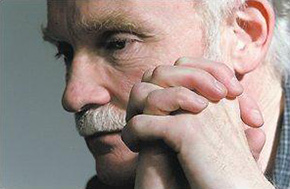
John Pesando, MDJohn Pesando MD, PhD, an oncologist, did what few doctors have the courage to do; which is to blow the whistle on wrongdoing at his own medical center. Dr. Pesando risked his career by sounding the alarm over Protocol 126, a dangerous, unethical human experiment at the Fred Hutchinson Cancer Research Center in Seattle. “What you’ve got in this guy is a rarity. You’ve got somebody who has the credentials. He’s seen all this, he’s on the inside, and he’s coming forward. That’s very, very rare.”

Dr. Pesando, who was a member of the Institutional Review Board, was concerned about the dubious science behind the experiment; there had been inadequate prior research on dogs before moving on to tests in humans. Protocol 126 researchers subjected the healthiest patients — whose chance of survival with current best treatment was good. Dr. Pesando saw no need to subject those patients to undue high risk. What’s more, the consent form was misleading; patients were not informed about those risks.

Furthermore, he was concerned about the financial conflicts of interest that were driving Protocol 126; the researchers and the Hutchinson Center had a stake in the biotechnology company that owned the rights to the drugs used in the experiment. For nearly two decades Dr. Pesando tried to stop the trial because patients enrolled in the experiment were dying — including some people who otherwise would be expected to live. “Real people lost their lives, and there was no way to stop it.”

Grant Fjermedal, a science and medical journalist and author of “Magic Bullets” (1991) encouraged Dr. Pesando to share his concerns with the proper authorities, which he did but no avail — until he went to The Seattle Times in 1998. The Times’ series, Uninformed Consent, won numerous awards.

Read The Seattle TimesThe Whistleblower; The Seattle Times Timeline of complaints and officials’ responses.

Similar Posts

  • InfoMail for February 18, 2002

      AHRP InfoMail Return to Home Page Return to InfoMail Media Coverage List MediaCoverage News Stories on Human ResearchProtection andCommentary by Vera Hassner Sharav February 18, 2002  FYI The Fred Hutchison Center in Seattle WA has failedthree FDA inspections The Seattle Times reported on Sunday that aleukemia study at the Fred…

  • AHRP Speaks Out

    AHRP Speaks Out Dec 12, 2005: Mental Health Screening: A PhRMA Friendly Remedy for Societal Problems. Presentation by Vera Sharav, American Public Health Association Nov 2005: Analysis of S. 1873 – The Biodefense and Pandemic Vaccine and Drug Development Act of 2005 – Karen R. Effrem, MD June 1-3, 2005:…

  • Article

    China Daily update: Harvard genetic research in rural China Wed, 1 Oct 2003 “It’s the responsibility of the dean of the School of Public Health and, ultimately, it’s my responsibility as president of [Harvard] university to see to it that where wrong can be put right it is and, more…

  • FDA: Regulatory Protections for Children

    Comments submitted by Vera Hassner Sharav, John H. Noble, Jr., Ph.D and Howard Fishman, MEd, MSW for AHRP

    To: Dr. Bernard Schwetz Acting Commissioner Food and Drug Administration, Dockets Management Branch (HFA-305) Food and Drug Administration

    Re: COMMENT ON: Docket #00N-0074 April 24, 2001 Interim Rule: "Additional Safeguards for Children in Clinical Investigations of FDA-Regulated Products

    Excerpt: The FDA rightly chose not to permit the section 46.408 (c) waiver by IRBs of parental or guardian permission, as it leaves the specific circumstances for such a violation of parental rights to the discretion of local Institutional Review Boards (IRB). Given the stream of revelations of gross ethical and procedural violations at one after another of the nation’s premier research institutions, assumptions that “procedural safeguards are in place,” or that IRBs can be relied upon to make decisions that protect the best interests of human subjects – adults and children – has been debunked.

  • VACCINE EPIDEMIC

    Vaccines are legally classified as "unavoidably unsafe"–an indication that they pose an inherent risk. Vaccines have not been subjected to scientifically rigorous placebo controlled safety trials before they have been approved for use in children. The public debate over vaccine safety has intensified as a continuing stream of news reports…

  • Evidence of Neuroleptic Drug-Induced Brain Damage in Patients


    A partial, Annotated Bibliography by Vera Hassner Sharav

    For distribution: January, 2000

    Although patients, families and the public were not informed – some would argue they were deceived – clinical psychiatrists and researchers have long known about severe adverse drug reactions (ADR) and disabling changes in the central nervous system in a high percentage of patients taking standard neuroleptic drugs.